
Documentary study
Roma Culture
Full text of the article “Cultura Gitana – Mujer Gitana Transmisora de su cultura”. Source: https://mujergitana.es/cultura-gitana/
Editorial note: this document is a translation of the text published on the website above. Historical claims, hypotheses about Roma origins and religious interpretations are left as the positions of the original text; they are not additionally verified or amended here.
Documentary photographs
Introduction
From childhood I lived by rules that made me feel different, because Roma women could not live or behave in the same way as Castilian women. I asked myself: why do we have to be different?
This way of life was passed on to me by my mother, who was responsible for raising her children. Because of that responsibility, a woman was held to stricter demands than a man.
A Roma man could in many situations live like a Castilian, but the preservation of Roma identity depended on his being married to a Roma woman, who differed from a Castilian woman by a different way of life.
Whether a household has a more traditional character also depends on the woman, who is responsible for raising sons and daughters and for passing culture on to her descendants. The woman's formative role extends also to the husband, who lives in the household she creates.
According to the author, these functions of the woman were already recognised by the Bible, where it is written that God commanded his people not to marry women of other nations who worshipped other gods and practised another culture, so that they would not lose their identity and their faith.
The woman is therefore, according to the author, the best representative who can speak about her culture.
Throughout my schooling, history lessons never spoke of my people; we were considered so insignificant that not even our cultural origin was mentioned.
Over the years I began to hear our history being promoted by other associations, in lectures at schools and so on.
It puzzled us, as it puzzled many other families, when it was said that our origin is in India, because our elders never told us about India, only about Egypt.
One day, after a school lecture, I discussed this subject with the man who gave it. In the end he answered me: “Historians and anthropologists have said so.” Yet even he did not know whether their claims had a sufficient basis for determining the origin.
I shared this small dispute with a brother in the faith. He told me: “Sister, do not argue. Just answer him with a question: why is Roma law founded on the Old Testament?”
I was surprised and for a moment I was left speechless. I had never heard such a claim before. I had seen some elements of our culture in the Bible, but it had not occurred to us that the root of our Roma law might be there.
From that moment I began to look for all our laws and to study our history.
The theory of the Indian origin of the Roma was, according to the text, formed on the basis of a linguistic analysis of Romani, the Roma language.
Romani belongs among the languages spoken in India, known as the Neo-Aryan languages, and there is a similarity in it to some words used by the Roma.
Other theories of historians concerning vocabulary existed earlier. In 1778 Jacob Bryant pointed out similarities between the “Gipsy” language and the languages of Persia and Hindustan. The German Thomasius put forward a theory of origin in 1651 in the work Dissertatio Philosophica de Cingaris, and in the following century the Italian Griselini claimed that the Gypsy ethnic group was a mixture of Egyptians and troglodytes.
Voltaire believed in an Egyptian origin with an admixture of Syrian origin. Raffaello Maffei, called Volaterranus, identified the Gypsies with the Uxii, a people neighbouring the Persians and known as soothsayers.
After studying the vocabulary and the various theories, I concluded that I wanted to uncover the secret of our culture.
1. The origin of the Roma
There are various and contradictory opinions about the origin of the Roma and, despite historical research as well as research in anthropology and philology, the text holds that the place of origin of this people cannot be determined with certainty.
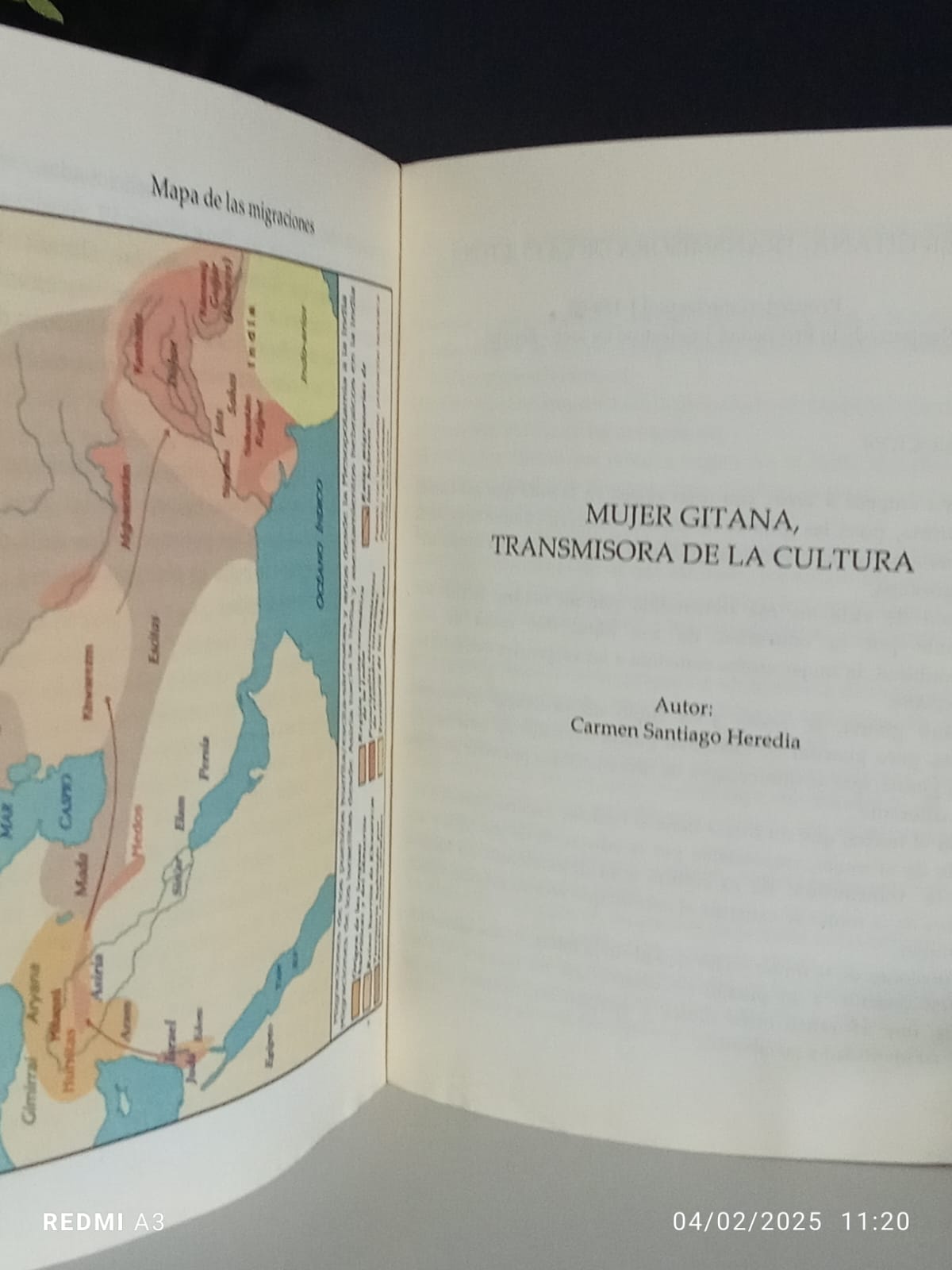
Various researchers have sought their origin in Egypt, Nubia, Syria, Mesopotamia, India or the Caucasus region.
Because of the similarity of the Roma language to dialects used in India, many accepted the hypothesis that the Roma come from India, although according to the author this fact may indicate only a long stay in India, not the origin of the people.
Because the Roma used to be regarded as magicians, authors such as Poldarus Virgilius linked them with the magi of Chaldea or Syria. The Sigynnae, a people described by Herodotus and coming from the same Iranian space, were identified with the Roma by some researchers.
In George Borrow's time, the most successful theory was considered to be the possibility that the Gypsy people are one of the lost tribes. The Gypsies themselves, according to the text, claimed to be heirs of Abraham and Sarah.
The historian Pierre-Joseph de Haize in the 13th century saw their origin in a mixture of Jews and Hussite Christians. Both Collin de Plancy and Wagenseil connected certain features of the Jews with features of the Roma. Some Spaniards considered them descendants of Jews and Moors persecuted in Andalusia.
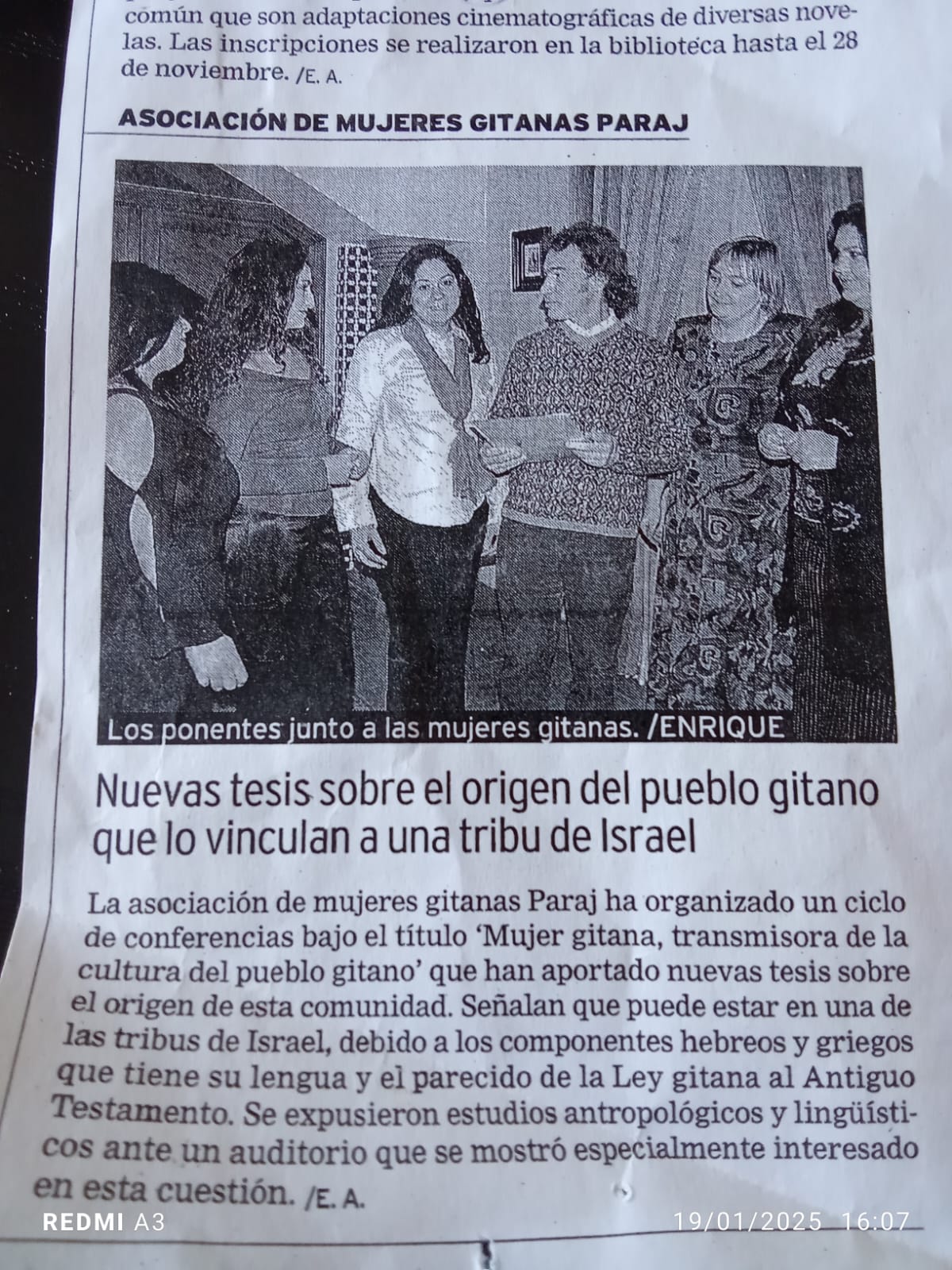
Of all the hypotheses, the one that interests the author is that the Roma people come from Syria, perhaps as one of the lost tribes of Israel. The text states that many features of Roma culture resemble biblical Hebrew culture and that the study will compare certain elements of both cultures.
The text goes on to describe the Assyrian deportations of the inhabitants of northern Israel and refers to 2 Kings 17 and to Flavius Josephus. There follows a comparison of certain Roma customs with biblical feasts and the Jewish Passover, particularly in connection with the Roma feast of Kakava.
In various countries the Roma were also called Egyptians. The text recalls that Israel likewise came out of Egypt.
2. Persecution
“My God will cast them away, because they did not listen to him; and they shall be wanderers among the nations.” – Hosea 9:17
The history of the Roma people is, according to the text, full of persecution, expulsion, rejection and suffering. They never had a country of their own and always lived among other nations. In India the Roma were considered an ethnic minority. At the beginning of the 1970s, India under Prime Minister Indira Gandhi began officially to support the Roma effort for a better life.
The history of the persecution of the Roma is compared in the text with the history of the Jewish people.
The Roma were rejected in Europe almost from the beginning of their presence. The text lists a series of historical measures in Germany, France, Sweden, Poland, Milan, the Netherlands, the Papal States and Spain, which included expulsion, corporal punishment, confiscation of property and, in some cases, the death penalty.
For Spain, the pragmatic of Medina del Campo of 1449 is cited, which ordered the expulsion of the Roma with harsh punishments for those who remained.
The text then turns to the Nazi persecution of the Roma. The Nazis compiled lists of Roma inhabitants and excluded persons of Roma origin from schools, the army, housing and work, and sent them to concentration camps. Imprisonment, medical experiments and mass executions are also reported.
According to the text, it is estimated that during the Second World War more than half a million Roma perished in gas chambers, concentration camps and mass executions. The conclusion of this section stresses that, despite centuries of persecution, the Roma population survived and continued to grow.
3. Language
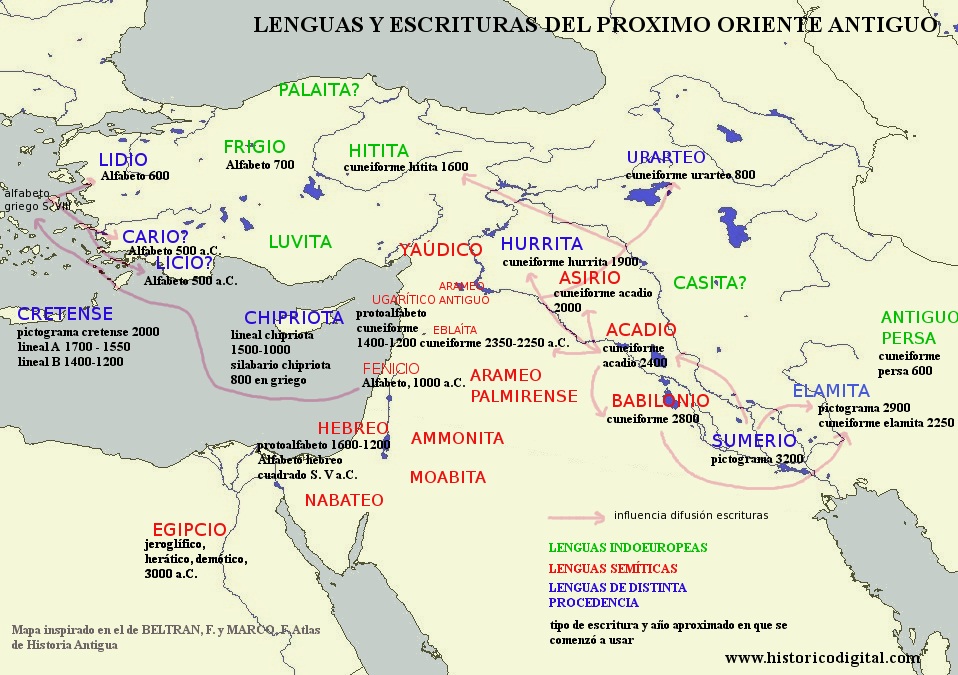
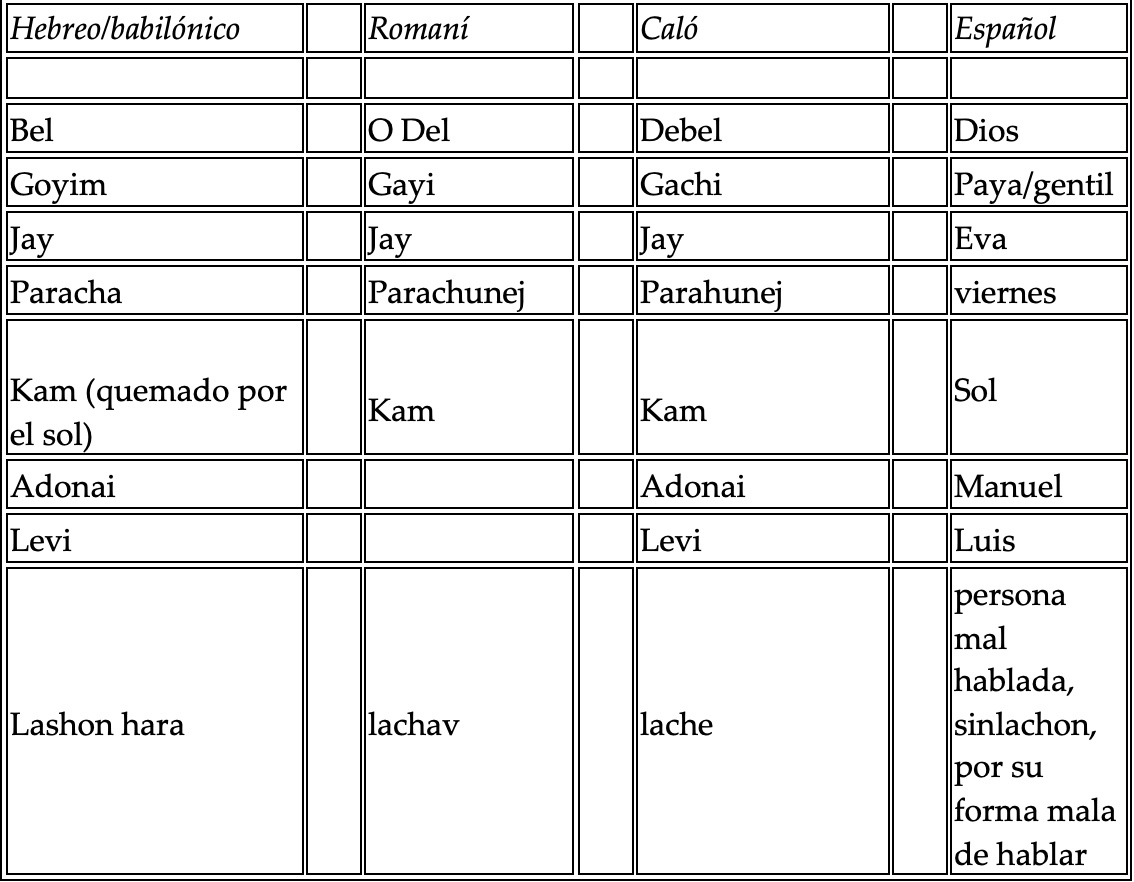
According to the text, Romani shows similarities not only with Indian dialects but also contains a considerable number of Persian loanwords. The author states that she compared some words with Hebrew expressions.
Abraham Revello writes, according to the text, that from Romani one may infer a long stay of the Roma in India, as well as a long stay in the Balkans and in Eastern Europe. This does not mean, however, that the Roma are a Balkan or Slavic people.
The text states that Romani may contain expressions of Semitic, Egyptian or Canaanite origin. The author also admits the possibility that Romani was not the original language of the Roma and that it arose gradually under the influence of the languages of the countries in which the Roma lived.
Like some other peoples, the Roma may on this reasoning have lost their original language in the course of history and adopted or created a new one. The text draws a parallel with the history of Jewish languages and with the extinction of Old Egyptian.
The author therefore considers it more meaningful to examine not only the language but also the culture and spirituality, which in her view may reveal ancient ties to the origin.
On the basis of these elements the text puts forward the hypothesis of a Roma origin in the Near East, a subsequent long stay in Persia and Media, and a later migration to the Indus valley and Rajasthan.
4. Music
The Spanish musicologist Felipe Pedrell, while studying musical folklore, addressed the question of why Roma songs and dances are called flamenco. He believed that something persists in them that is connected with the origin of a nomadic people and recalls a Syrian and surrounding regional character together with Moorish influences.
The text compares the music of the Roma in Spain with the music of the peoples of the Caucasus and emphasises the similarities of certain melodies with the Arabic music preserved in Andalusia. It also recalls Manuel de Falla, according to whom the Roma settled in the Sacromonte of Granada from the 15th century brought into older Andalusian music a new element called cante jondo.
The text further presents a theory according to which flamenco may be connected with synagogal chant and with the Sephardic Jews. This theory is associated with Medina Azahara and with the interpretation of the word “jondo” as a possible corruption of the Hebrew expression “Yom Tov”.
“And I will turn your feasts into mourning, and all your songs into lamentation.” – Amos 8:10
Flamenco jondo is described here as the oldest part of this art. The text interprets it as the voice of a people subjugated for centuries, which suffered poverty and persecution. It attaches particular significance to the forms toná, seguirilla and soleá.
According to the author, cante flamenco is the lament of a historically oppressed people; the songs express despair, dejection, lamentation, resignation, a wounded soul, superstitions and the dark confession of a suffering people.
5. Faith and religious ideas
“Evil shall come upon thee; thou shalt not know its origin.” – Isaiah 47:11
The origin of the Roma has, according to the text, long occupied historians. More recent studies, it says, link them with India and admit the possibility that many Roma were brought to India as slaves.
The text, however, stresses the difference between Indian polytheism and the monotheism it attributes to the Roma people. The author asks where such a faith could come from and argues that the Roma did not bring from India a system of belief about God and the afterlife, but rather a certain way of life.
Judaism is described in the text above all as a way of life and a lifestyle.
The names of some leaders of the groups that entered Europe are, according to the text, Hebrew: Panuel, Mihali, Sindel and Andrah. The name of God is given in the forms Undebel, Otebel and Del. The text proposes a possible division “Del = God” and “bel = lord”.
Parallels between Roma legends and biblical stories are then given. The text mentions the names of the patriarchs, the lunar calendar and the notion that illnesses may be caused by demons.
One of the legends described in the text tells of a revolt, of freedom won and of a land called Kaldi (Chaldea), from which the people divided into groups. One part was to go east to India and another west through Persia and Greece. The text emphasises the motif of a common origin and of a future reunion of the separated groups.
The author further reports traditions connected with a comet, the star of the magi, the names of the biblical patriarchs and the lunar cycle. She interprets these similarities as possible links between Roma and biblical traditions.
6. Crafts and occupations
According to the text, the Roma were known for their specialisation in working iron, bronze, gold and other precious metals. Franz de Ville reports the thesis of Bataillard, according to which it may have been the Roma who brought bronze to Europe.
In India their metalwork was, according to the text, of higher quality than the work of local craftsmen.
In describing the building of the tabernacle and later of Solomon's temple, the Bible mentions Israelite families specialised in working with metals. The author sees in this a further possible parallel.
7. Roma law
The main mark that, according to the text, identifies the Roma community is a life ordered by Roma law.
Roma law is described here as founded on respect, order in the family and the worth of a person who keeps his word. The author finds its parallels in the Old Testament of the Bible.
The patriarch – the word is related to the father. The Roma are, according to the text, organised into families, and each family receives a byname after the eldest man, who advises and admonishes the others. When a Rom wishes to learn another's origin, he asks: “Whose son are you and from which family?” – Numbers 3:20, 27.
The council of elders – a meeting of Roma elders for the purpose of resolving problems. They are mediators. The text likens it to the judges of Israel and to the beth din.
The staff – a symbol of authority, respect and maturity used by elder men.
Respect for father and mother – Exodus 20:12.
Respect for elders – Leviticus 19:32.
Keeping one's given word – a person who keeps his agreements is considered honourable.
The firstborn son – inherits the father's respect towards his siblings.
The daughter – represents the honour of the family; her dishonour means the dishonour of the whole family.
Exile – a person may be excluded from the community if he does not keep the agreements of the elders or breaks the laws.
Rejection of mixed marriages – linked in the text to the fear of losing cultural identity.
Financial help – helping the needy is considered a duty.
Hospitality – people are received in households even when they are not relatives.
Lending money – according to the text, no interest is charged.
Salt – refusing to give salt to a neighbour is associated with fear of misfortune; a monetary gift is given instead. The text refers to Leviticus 2:13.
Visiting the sick – the visit is an expression of concern, and omitting it is considered a serious failing.
The mourning period – after the death of a close relative a person lives apart from the community and observes strict restrictions.
Rejection of public baths – connected with restraint in uncovering the body.
Division of land – families usually live in the towns or villages where the father's family lives.
The blessing of family unity – granted by the eldest member of the family at a common gathering, today, according to the text, also at Christmas. Numbers 6:22–27.
8. Marriage
Asking for the hand – parents usually advise the son in choosing a partner. The parents ask the girl's family, as a rule her father, for her hand. In the presence of witnesses the parents are betrothed by a spoken promise. According to the text, betrothals were usually not broken; if this happened, the reason had to be announced to both families.
The text also describes a situation in which the bride's parents refuse consent to the marriage. According to this description, the girl could, with her consent, be taken by her betrothed to the house of his parents and then married according to tradition. The father was to have the right to cover the costs and to choose the guests.
Weddings – after the banquet, the celebrations and the dances, the festivities proceeded in an ordered manner. The climax of the wedding was, according to the text, the test of the bride's virginity and her being carried on shoulders, followed by a song of praise called “yeli”. The men of her family tore their shirts because their family had been honoured.
The author states that the manner of contracting marriage, the test of virginity and the carrying of the bride have parallels in Hebrew wedding customs.
According to Antonio López, in Chile and in part of Latin America “Hava Nagila” is sung at Roma weddings.
The text further claims that the dress of Roma women differed from the usual dress of Indian women. Whereas in India the sari is used, Roma women – including Roma living in India – wore, according to the text, blouses and colourful skirts.
It is further stated that Spanish Roma in the past neither adopted nor imitated the customs of others and did not give up their own laws.
Juan de Dios Ramírez Heredia is quoted to the effect that a Rom believes he offends God when he ceases to observe the basic laws of his community.
The text expresses concern that present-day integration leads to the retreat of old customs and of the traditional spirit of mutual brotherhood. It mentions three traditional principles: never leave a Rom's debt unpaid, remain faithful to a Rom, and repay Roma debts honestly.
The conclusion of this section stresses that, in the author's view, Roma culture was not without religion, as some historians have claimed. Their own elders were to be regarded as “priests”, and faith was bound up with the observance of Roma law.
Finally the text recalls that the people of Israel were governed by a law given by God, and that observing those laws meant worshipping God.
9. Conclusion
The Roma people were, according to the text, greatly dispersed and went through a great exodus, which is compared with the exodus of the Jewish people. The similarities between the two peoples lead the author to suppose that the Roma may be one of the lost tribes of Israel, driven by the Assyrians to the eastern edge of their empire, as far as the region of present-day India.
The author states that the evidence could be extended in each of the topics mentioned, but that because of limited time she did not do so. She wishes the document to serve as a basis for further historical research and for continuing study of the history of the Roma people.
*Supplementary information 2025.
Bibliography
- Bible, Reina-Valera 1960 (Unilit)
- Thomas Acton, Gitanos, Madrid 1983 (Espasa Calpe)
- J. P. Clébert, Los gitanos, Barcelona 1965 (Ayma)
- Enciclopedia Universal Ilustrada Europea Americana, Espasa Calpe (vol. XXVI)
- François de Vaux de Foletier, Mil años de historia de los gitanos, Plaza y Janés, Barcelona 1974
- Hipólito Rossy, Teoría del cante jondo, Barcelona 1966
- Joaquín García Lavernia, El libro del cante flamenco
- Johanna Paszkowska, ethnologist
- Photographs: Piotr Wójcik (Agencia Gazeta); M. Wójcik and M. Skorupski (Forum)
Intellectual property J-188-03 — Carmen Santiago Heredia, Registro de la Propiedad Intelectual de Jaén, Spain. Source: mujergitana.es